Dried Fruits: Health Benefits, Nutrition Facts, and How to Enjoy Them Daily

Dried Fruits: Health Benefits, Nutrition Facts, and Best Ways to Eat Them
Meta Description: Discover the health benefits of dried fruits, their nutrition facts, top varieties in the US, and smart ways to eat them as snacks or natural sweeteners.
Dried fruits have quietly become a staple in many American kitchens—from trail mix and lunchboxes to smoothie bowls and baking. If you’ve ever tossed raisins into oatmeal or added dried cranberries to a salad, you already know the appeal: they’re sweet, portable, and easy to store.
But are dried fruits actually “healthy,” or are they basically candy in disguise? The honest answer is: they can be a nutritious choice—especially when you pick the right products and keep portions reasonable. Below you’ll find a practical, research-grounded guide to dried fruit nutrition, proven benefits, popular varieties in the U.S., and easy ways to eat them daily.
What Are Dried Fruits?
Dried fruits are simply fruits with most of their water removed, either by sun-drying or mechanical dehydration. Removing water concentrates natural sugars and calories—along with many nutrients like fiber and potassium. That’s why dried fruit tastes sweeter than fresh fruit and why portions matter.
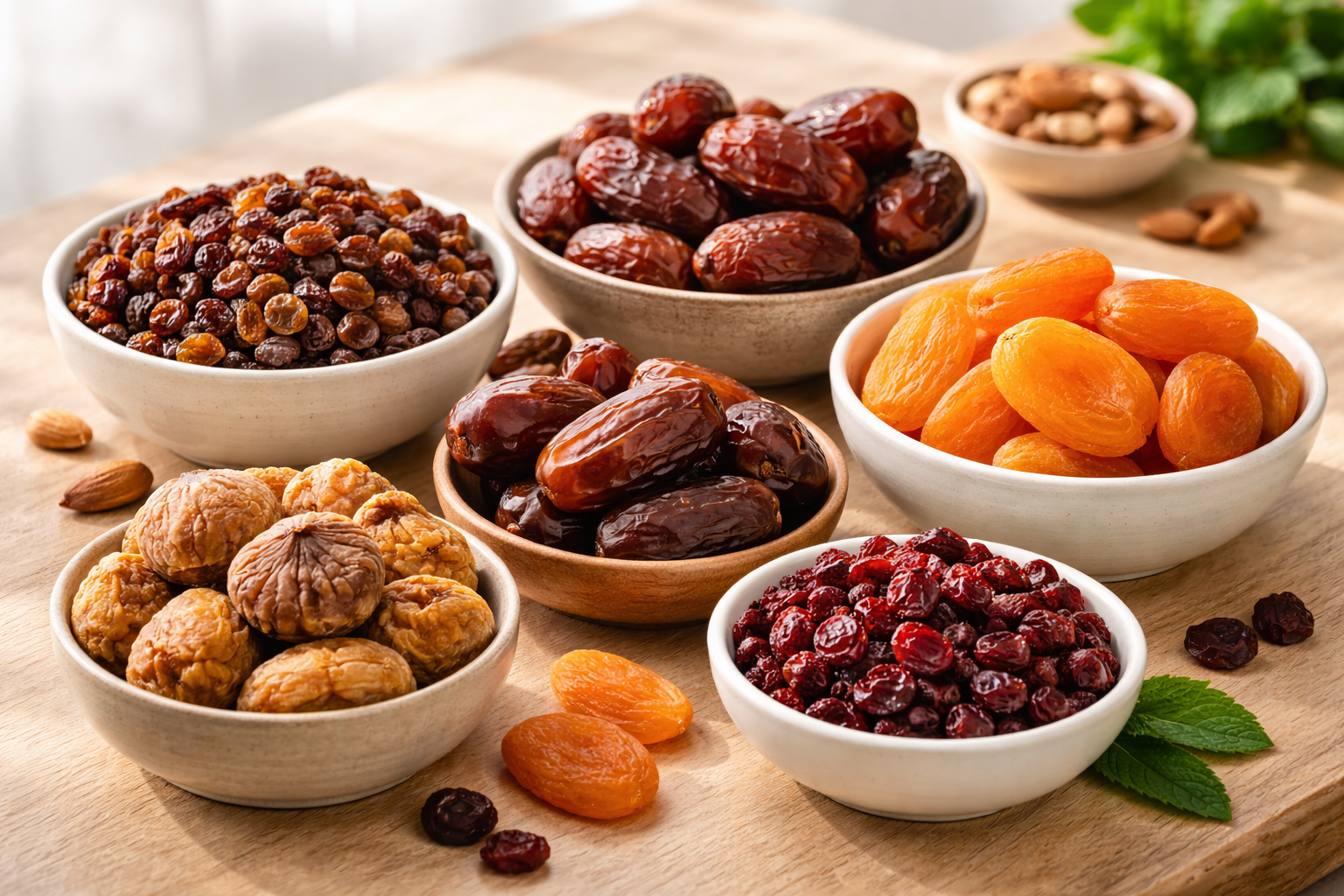
Common examples include raisins, dates, apricots, figs, prunes, and cranberries. In U.S. grocery stores, you’ll also see dried mango, pineapple, cherries, and mixed blends.
Dried Fruit Nutrition (USDA-Based Overview)
Nutrition varies a lot by fruit type and whether sugar is added. Still, USDA FoodData Central listings consistently show a similar pattern: dried fruits are calorie-dense, often fiber-containing, and can provide meaningful potassium and other minerals.
Nutrition Facts Table (Per 100g)
| Nutrient | Typical Range (varies by fruit) |
|---|---|
| Calories | ~250–300 kcal |
| Carbohydrates | ~65–75 g |
| Dietary Fiber | ~7–10 g |
| Protein | ~2–3 g |
| Total Fat | ~0–1 g |
| Potassium | ~600–800 mg |
| Iron | ~1–2 mg |
Source note: Values vary by fruit (raisins vs. dates vs. apricots, etc.). For exact numbers, check the specific fruit in USDA FoodData Central.
Health Benefits of Dried Fruits (What the Evidence Supports)
1) Fiber for Digestive Health
Many dried fruits contain both soluble and insoluble fiber, which supports regular bowel movements and overall gut health. Prunes are especially known for digestive support, largely due to fiber and naturally occurring compounds like sorbitol.
2) Convenient Energy for Busy Days
Because drying concentrates natural sugars, dried fruits can work well as quick energy—especially for hiking, long workdays, or pre-workout snacks. Think of them as a more “whole-food” sweet option compared with candy, but still something to portion.
3) Heart-Friendly Minerals (Especially Potassium)
Many dried fruits contribute potassium, a mineral associated with healthy blood pressure when consumed as part of an overall balanced diet. Pair dried fruits with nuts to turn them into a more filling, steadier snack.
4) Antioxidants
Dried fruits contain plant compounds (like polyphenols) that act as antioxidants. These compounds help the body manage oxidative stress. Antioxidant levels differ widely across fruit types and processing methods.
5) Bone and Blood Support (Mineral Contribution)
Some dried fruits (like figs and apricots) can contribute minerals such as magnesium and iron. They won’t replace major sources on their own, but they can help round out your intake.
Popular Dried Fruit Varieties in the U.S.
- Raisins: versatile, budget-friendly, easy in oatmeal and trail mix.
- Dates: naturally caramel-like; great as a natural sweetener (date paste).
- Dried Apricots: tangy-sweet; check labels for sulfites and added sugar.
- Figs: chewy, fiber-containing, excellent with cheese boards.
- Prunes: a classic option for digestive regularity.
- Dried Cranberries: often sweetened—look for “unsweetened” or “no sugar added” when possible.
- Dried Mango/Pineapple: delicious, but frequently sweetened—read labels carefully.
Best Ways to Eat Dried Fruits
If you want dried fruit to work for you (not against you), use it strategically—mainly as a flavor booster and sweetener rather than a “bottomless snack.”
Easy ideas
- Add 1–2 tablespoons of chopped dried fruit to oatmeal or Greek yogurt.
- Make trail mix: nuts + seeds + dried fruit (better balance than fruit alone).
- Chop into salads or grain bowls for a sweet-savory contrast.
- Blend dates into smoothies or use date paste in baking as a natural sweetener.
- Pair figs or dates with cheese for a simple snack plate.
How to Choose Dried Fruits (Smart Shopping Tips)
- Check the ingredient list: ideally it’s just the fruit (and maybe citric acid).
- Watch for added sugar: especially on cranberries, mango, pineapple, and mixed blends.
- Mind sulfites: some dried fruits use sulfites to preserve color; if you’re sensitive, choose “unsulfured.”
- Go for organic if it fits your budget: “organic dried fruit” can be a preference, but label-reading matters more than the word organic.
How to Store Dried Fruits
- Keep in an airtight container in a cool, dry place.
- For longer freshness (especially in humid climates), store in the fridge.
- Freeze large bags if you buy in bulk.
FAQ: Dried Fruit Health Benefits
Are dried fruits healthy for weight loss?
Dried fruits can fit into a weight-loss plan, but portion size matters because they’re calorie-dense. A small measured serving can satisfy sweet cravings without turning into excess calories.
How much dried fruit should I eat per day?
Many people do well with about 1/4 cup as a serving, depending on your overall calorie needs. If you’re pairing with nuts or yogurt, you may need less.
Are dried fruits good for diabetics?
Dried fruits can raise blood sugar due to concentrated carbs. If you manage diabetes, consider smaller portions and pair with protein/fat (like nuts) and follow guidance from your clinician or dietitian.
Are dried fruits as healthy as fresh fruit?
Dried fruits retain many minerals and fiber, but they lose water and may lose some heat-sensitive vitamins during processing. Fresh fruit is easier to eat in larger volumes with fewer calories, while dried fruit offers convenience and shelf life.
Can dried fruits replace candy?
Often, yes. Dried fruits provide sweetness plus fiber and nutrients—making them a better option than candy for many people. The key is choosing options without added sugar and sticking to a reasonable portion.
Conclusion / Takeaway
Dried fruits can be a genuinely healthy addition to your diet when you treat them like a concentrated food: small portions, smart pairings, and minimal added ingredients. Pick mostly unsweetened varieties, combine them with protein or healthy fats, and use them as a natural sweetener in meals—not just a mindless snack.