Turkish Delight (Lokum): History, Nutrition Facts, and How to Enjoy It Mindfully

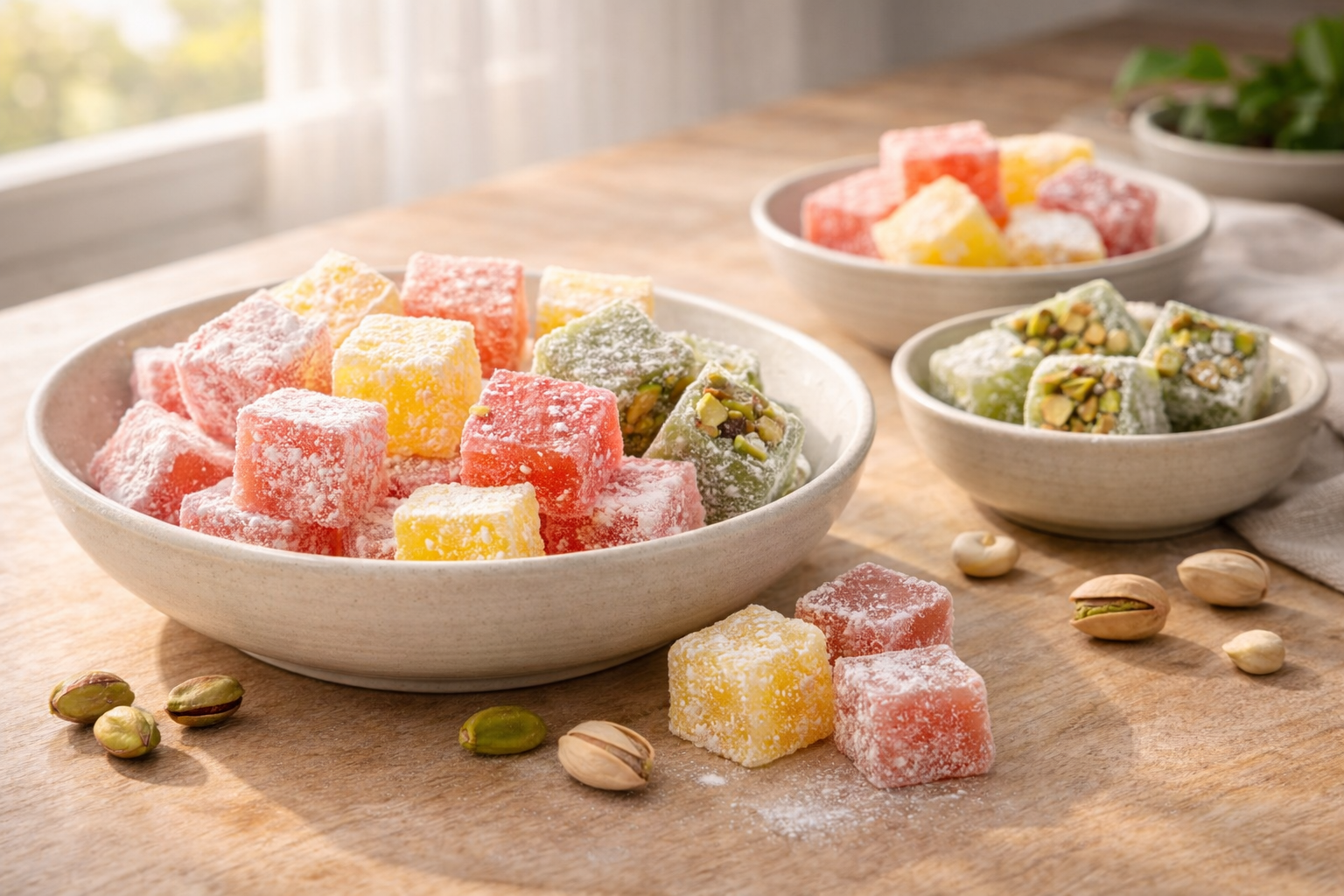
Meta Description: Discover Turkish Delight (Lokum), its history, ingredients, nutrition facts, and how to enjoy it mindfully as part of a balanced diet.
What Is Turkish Delight (Lokum)?
Lokum is a traditional sweet made primarily from sugar, water, and starch, flavored with natural extracts and often filled with nuts. It originated in the Ottoman Empire and was designed as a softer alternative to hard candies.
Main Ingredients
- Sugar or glucose syrup
- Water
- Cornstarch or wheat starch
- Citric acid or cream of tartar
- Natural flavorings
- Nuts (pistachio, walnut, hazelnut)
Nutrition Facts (Per 1 oz / 28 g)
| Nutrient | Amount |
|---|---|
| Calories | 90–110 kcal |
| Carbohydrates | 22–25 g |
| Sugar | 18–20 g |
| Fat | 0–2 g |
| Protein | 0–1 g |
Is Turkish Delight Healthy?
Turkish Delight is mainly sugar-based, so it’s best enjoyed occasionally. It’s low in fat but high in added sugars.
Popular Varieties
- Rose
- Lemon
- Pistachio
- Pomegranate
- Mastic
How to Enjoy It Mindfully
- Enjoy with coffee or tea
- Stick to 1–2 pieces
- Choose nut-filled versions
FAQs
Is Turkish Delight gluten-free?
Most traditional recipes are gluten-free, but always check labels.
Is Turkish Delight vegan?
Yes, most classic versions are plant-based.
Conclusion
Turkish Delight is a cultural treat best enjoyed occasionally and mindfully.